Your underground pipes are failing faster than you think. Across America, over 800,000 miles of sewer lines and 2.2 million miles of water mains are in service today. A huge portion of these pipes has already passed the 40-to-60-year mark.
That is not a minor inconvenience. It is a full-blown infrastructure crisis that costs cities billions every year. After spending over fifteen years in the trenchless pipe repair services industry, we have watched pipes crumble from the inside out.
Sadly, municipalities, even today, waste millions on outdated dig-and-replace methods. Spray-in-place pipe rehabilitation is the solution that actually works. It fixes pipes without tearing up streets, sidewalks, or buildings. Cities and businesses are finally choosing smarter ways to fix aging infrastructure.
What Exactly Is Spray-In-Place Pipe Rehabilitation
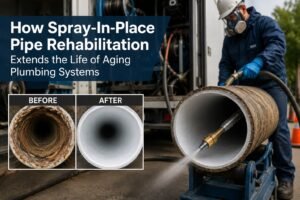
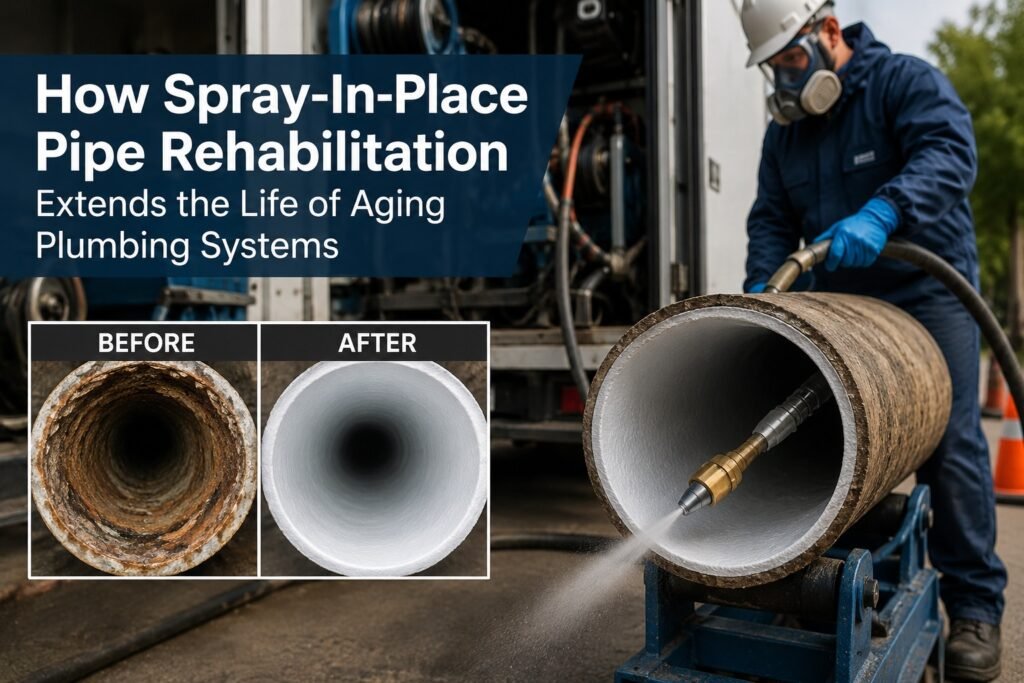
Spray-in-place pipe rehabilitation is a trenchless method that coats the inside of damaged pipes. Technicians spray a liquid polymer or resin onto the interior walls of the existing pipeline. The material cures in place and forms a seamless new lining.
This lining seals cracks, stops leaks, and prevents further corrosion. No excavation is needed for most applications. A robotic spray rig applies the coating through small access points.
The process works on pipes ranging from 4 inches to over 200 inches in diameter. The equipment works on gravity sewers, storm drains, water mains, and industrial pipelines.
Important to know that there are two main material types: cementitious and polymeric. For starters, the cementitious linings use Portland cement or geopolymer mortar.
On the other hand, polymeric linings use epoxy, polyurethane, or polyurea resins. Each material suits different pipe conditions and service environments.
How the Process Actually Works
The process begins with a thorough inspection via a CCTV camera. Since the camera goes deep into the places, it identifies all the cracks, corrosion, blockages, and structural weaknesses.
Next, using the hydro-jetting, the inside of the pipes is cleaned thoroughly, removing any debris, rust, or buildup.
Then, a second CCTV inspection confirms the pipe is ready for coating. Technicians then set up the spray equipment at access points. The robotic rig sprays the selected material onto the pipe walls. The coating builds up to a thickness between 125 and 250 mils. The material cures and hardens into a durable, seamless barrier.
A final CCTV inspection verifies the lining quality. The pipe returns to service quickly with minimal downtime.
How Long Does Spray-In-Place Rehabilitation Extend Pipe Life
This is the question every property owner asks first. The honest answer depends on material choice and installation quality.
Epoxy resin linings typically last 50 years or more when applied correctly. Cement mortar linings provide 30 to 40 years of service life. Polyurethane coatings offer 25 to 30 years of protection. These numbers come from real field performance, not marketing claims.
Early CIPP installations from the 1970s are still performing today. That gives us over 40 years of proven durability data. A pipe restoration company that does quality work will warranty its lining for decades.
The key is proper surface preparation and controlled curing conditions. Poor preparation causes voids and wrinkles that reduce lifespan. Experienced contractors know this. They never rush the cleaning step.
What Types of Pipes Can SIPP Fix
Spray-in-place pipe rehabilitation works on nearly every pipe material out there. Concrete pipes, brick pipes, clay pipes, steel pipes, and ductile iron pipes all qualify. It also works on corrugated metal pipes and some PVC systems.
The method handles round pipes, oval pipes, and even box-shaped culverts. Gravity sewer lines are the most common application. Water main rehabilitation is the fastest-growing segment right now. Storm drains and industrial pipelines also benefit from spray lining. Commercial pipe rehabilitation projects use SIPP for building drains and interior plumbing.
Sewer pipe lining services often combine SIPP with other trenchless methods. The versatility is what makes this technology so valuable.
How SIPP Compares to Traditional Pipe Replacement
Traditional dig-and-replace methods destroy everything above the pipe. Roads get torn up. Sidewalks get demolished. Landscaping gets ruined. Businesses lose revenue during weeks of construction.
SIPP pipe lining rehabilitation saves about 40 percent compared to full replacement. It also cuts project timelines from weeks to days. There is no heavy equipment noise. There is no traffic disruption. There is no restoration of concrete, asphalt, or sod afterward.
The environmental impact is dramatically lower, too. Less excavation means less soil disturbance and lower carbon emissions. For commercial pipe rehabilitation, this difference is massive.
A hotel cannot shut down for a month while crews dig up its sewer line. A hospital cannot close its operating rooms for pipe work. SIPP lets these facilities stay open during repairs.
What to Look for in a Pipe Restoration Company
Not every contractor delivers the same results. Ask about their experience with your specific pipe material and diameter. Request references from similar projects they have completed. Verify they follow NASSCO guidelines and ASTM standards. Ask about their CCTV inspection and cleaning procedures.
A reputable sewer pipe lining services provider will document every step. They will show you before and after footage. They will explain material options based on your pipe condition. They will provide a clear warranty in writing. Avoid anyone who gives a quote without inspecting your pipes first.
Frequently Asked Questions
What is spray-in-place pipe rehabilitation?
Spray-in-place pipe rehabilitation is a trenchless method that coats the inside of damaged pipes with a protective lining. It is done by technicians, spraying liquid polymer or cementitious material onto the interior walls.
How long can spray-in-place pipe rehabilitation extend the lifespan of pipes?
Properly installed epoxy linings last 50 years or more. Cement mortar linings provide 30 to 40 years of service. Polyurethane coatings offer 25 to 30 years of protection.
What types of pipes can be rehabilitated using spray-in-place technology?
SIPP works on concrete, brick, clay, steel, ductile iron, and corrugated metal pipes. It handles gravity sewers, storm drains, water mains, and industrial pipelines.
How does spray-in-place rehabilitation compare to traditional pipe replacement?
SIPP costs about 40 percent less than traditional replacement. It eliminates excavation, traffic disruption, and surface restoration. Projects finish in days instead of weeks. The environmental impact is significantly lower.
Conclusion
Aging pipes are not going away. They are getting worse every year. Spray-in-place pipe rehabilitation offers a proven, cost-effective, and minimally disruptive solution.
The market shows massive growth for the method. The best part? Technology keeps improving with better materials and robotic application systems.
When needed, always contact a qualified pipe restoration company for a professional inspection. Talk to Pipe Revive to learn more about trenchless pipe repair services and find expert guidance for your specific project.